A B2B plug-in(SaaS) application to enhance distributed team collaboration and culture

A virtual scenario embedded Microsoft Teams plugin for distributed colleagues to have continuous interaction as they grow themselves, contribute, and harvest in their flourishing company garden.

From Whom?

Distributed team:
- Companies are facing challenges in sustaining organizational culture while embracing hybrid-work, driving huge cost in talent management.

My Contribution

End-to-end Design Spring

Throughout the agile sprint, I’ve brought up critical design decisions through user research, led the iteration on low-fi and hi-fi prototypes, and validated through usability studies

Fundamental and Usability Research

I conduct 2-week fundamental research to identify opportunities and corresponding usability study to validate my design solutions.

Technical Feasibility Study

Evaluating widely used  SaaS platforms like MS Teams and Slack focuses on their plugin architecture, assessing development flexibility, integration potential, and the feasibility of scalable software execution with initial testing

View the Prodcut Website
Key Features.
Placeholders
One.
Shared Company Scenario
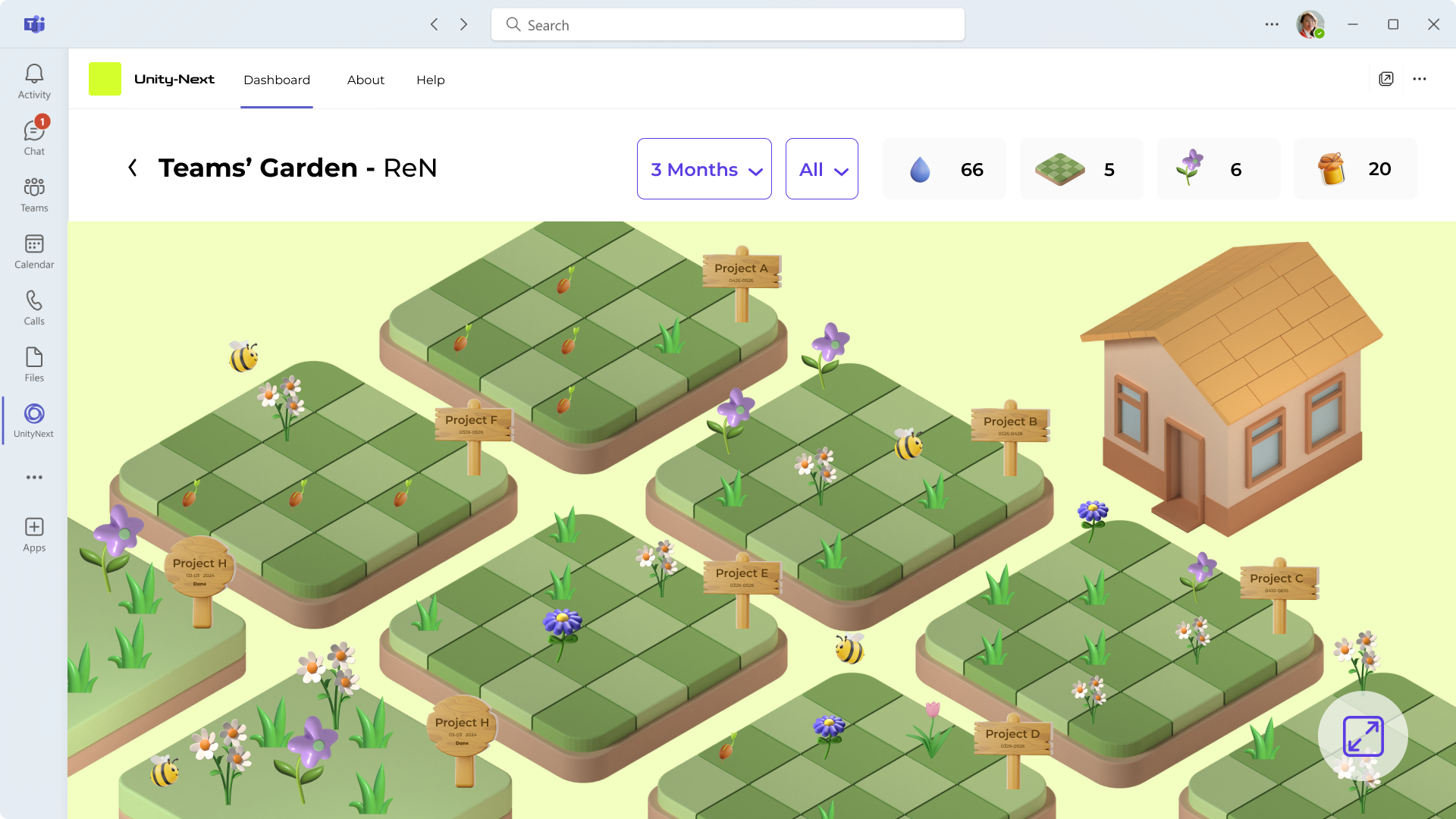
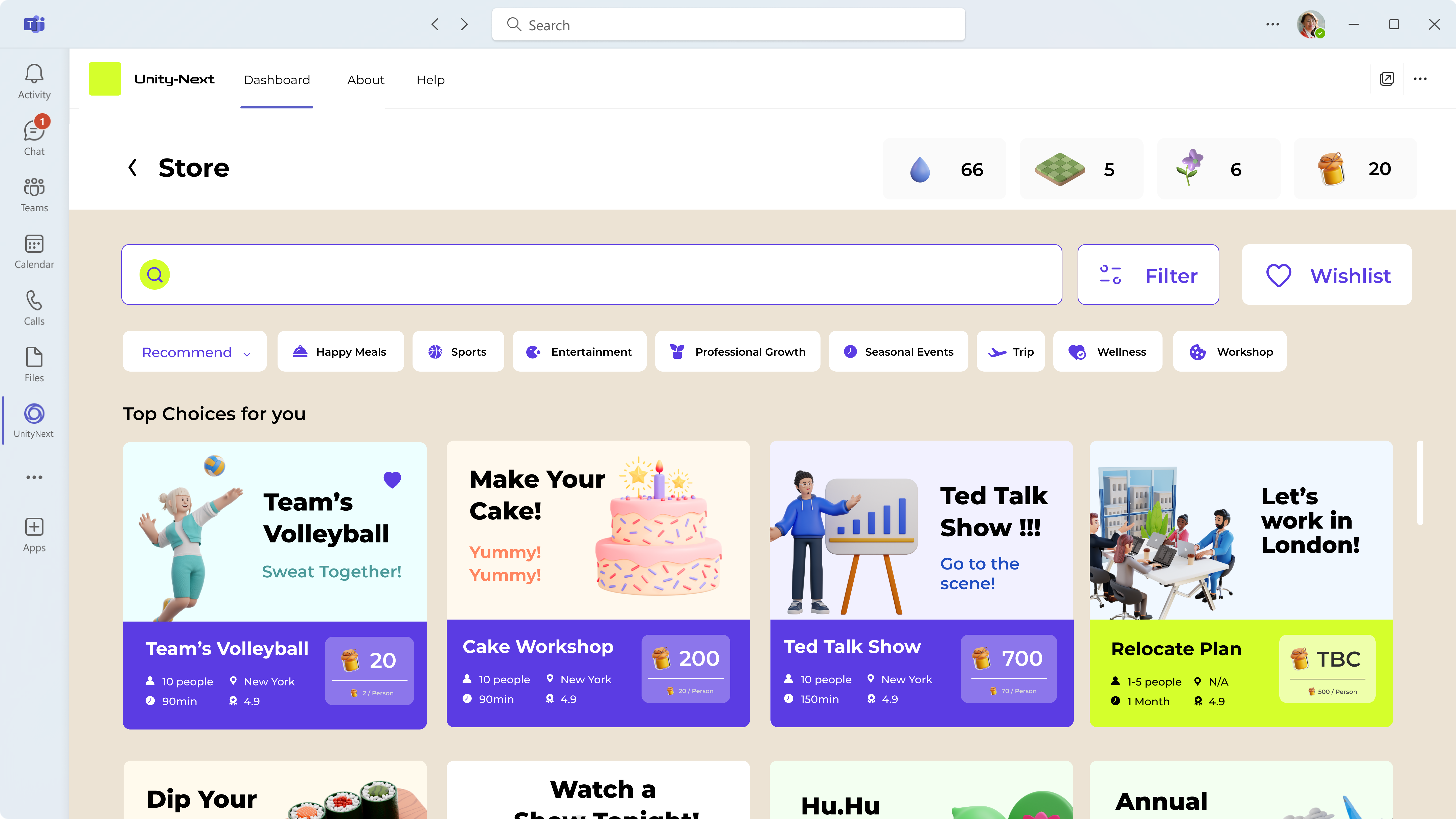
A gamified virtual scenario for company to share working experience, visualize contributions, and harvest efforts by growing personal "flowers" on the project land of the company garden.

- ​One company one garden; one project one land.
- One project member get one flower in the land; one person could have multiple projects.
- Flowers level-up by time and water drop from teammates, converted to honey when project ends.
Two.
Incentive System
As a B2B platform, Employee Analytics offers company reports weekly, monthly, and annually to evaluate hybrid teams and team members' performance and engagement, to adjust their future peoAn incentive system for employees to convert the outcome of the flowers into relationship-building-oriented rewards to facilitate them to have continuous interaction with the team.

- ​Flowers’ level converted to honey when project ends.​
- Use honey to exchange different relationship-building-driven benefits.ple and culture strategy.
Three.
Internal Network System
Company internal network system, with algorithms to recommend profiles for employee to connect.
Four.
Employee Analytics
As a B2B platform, Employee Analytics offers company reports weekly, monthly, and annually to evaluate hybrid teams and team members' performance and engagement, to adjust their future people and culture strategy.
Research proccess
The research process focuses on understanding user needs for transforming text into 3D room models. It aims to enhance user control and satisfaction by making the design process intuitive. Ultimately, the goal is to create a seamless and engaging user experience.
Test and Iteration.
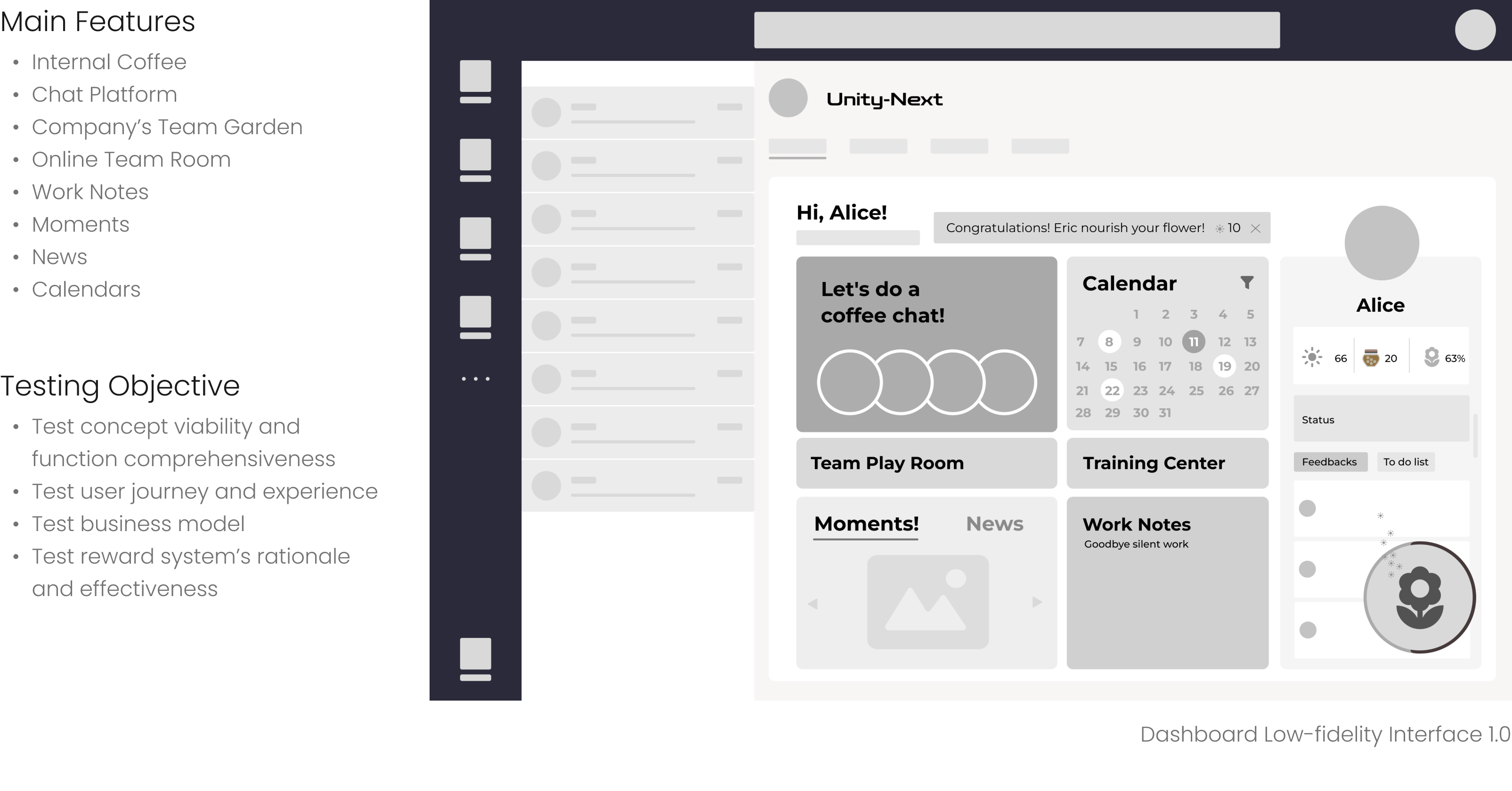
Unity-Next has been through serveral rounds of testing and iteration in total, with
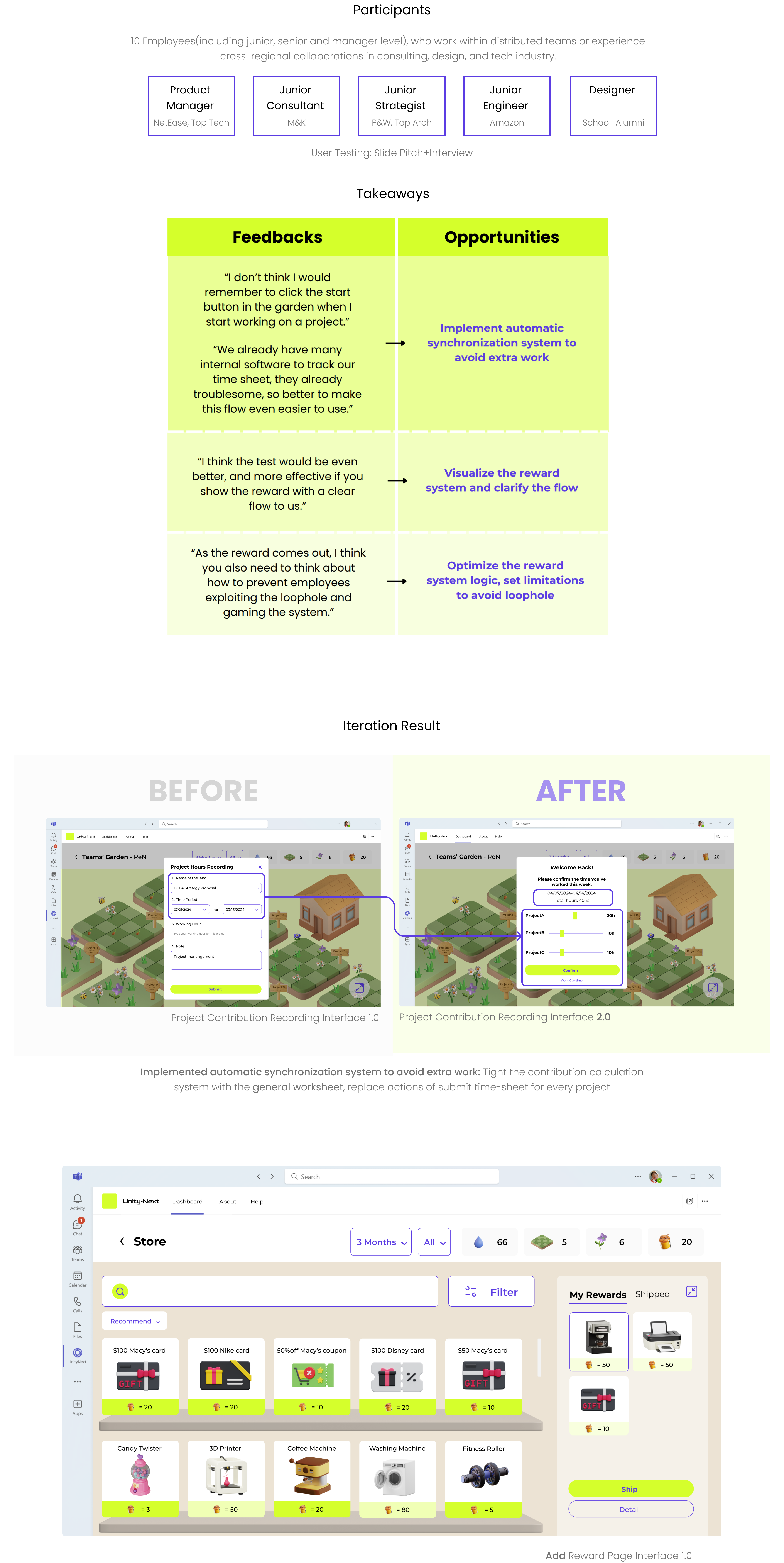
the main objectives including concept viability and function comprehensiveness, user journey and experience, business model, reward system’s rationale and effectiveness
One.
Overview and Testing Goal
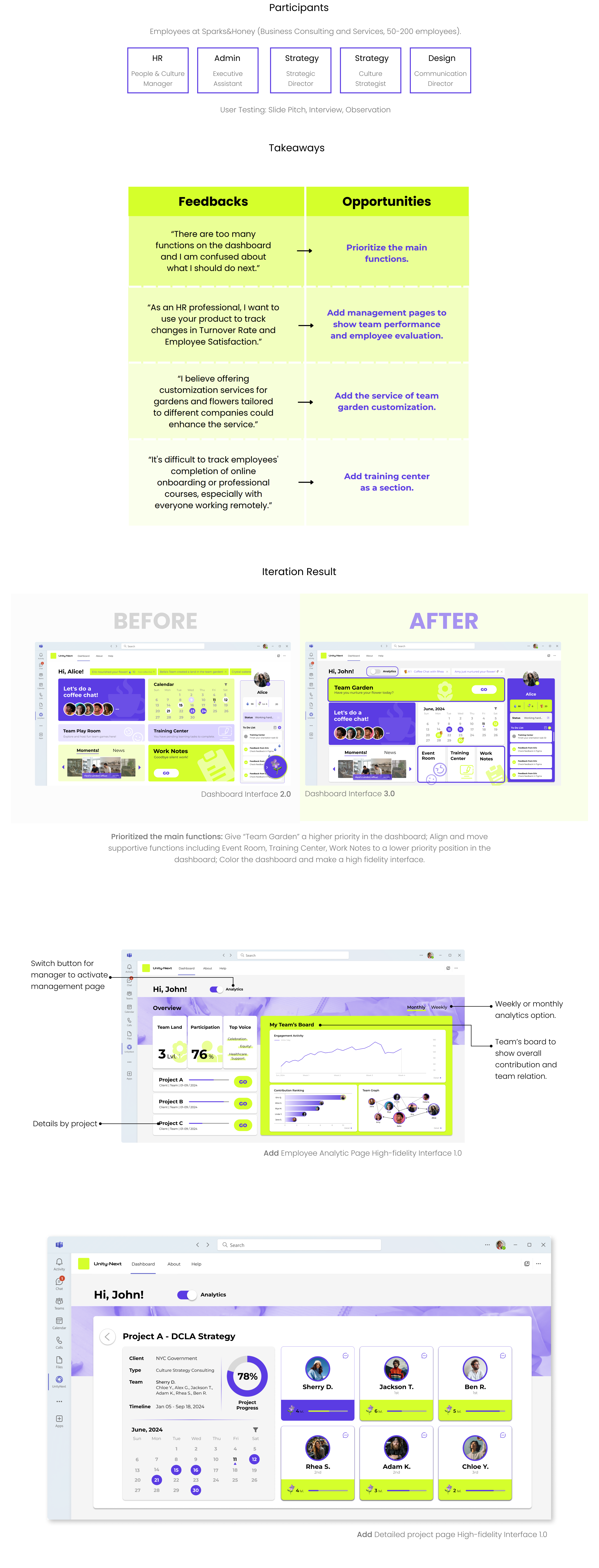
Unity-Next has been through serveral rounds of testing and iteration in total, with the main objectives including concept viability and function comprehensiveness, user journey and experience, business model, reward system’s rationale and effectiveness
Two.
Concpet Vailidation
Test the product concept's viability by understanding target customers' realwork situations and presenting prototype designs while explaining productfunctionality
Three.
User Journy Testing
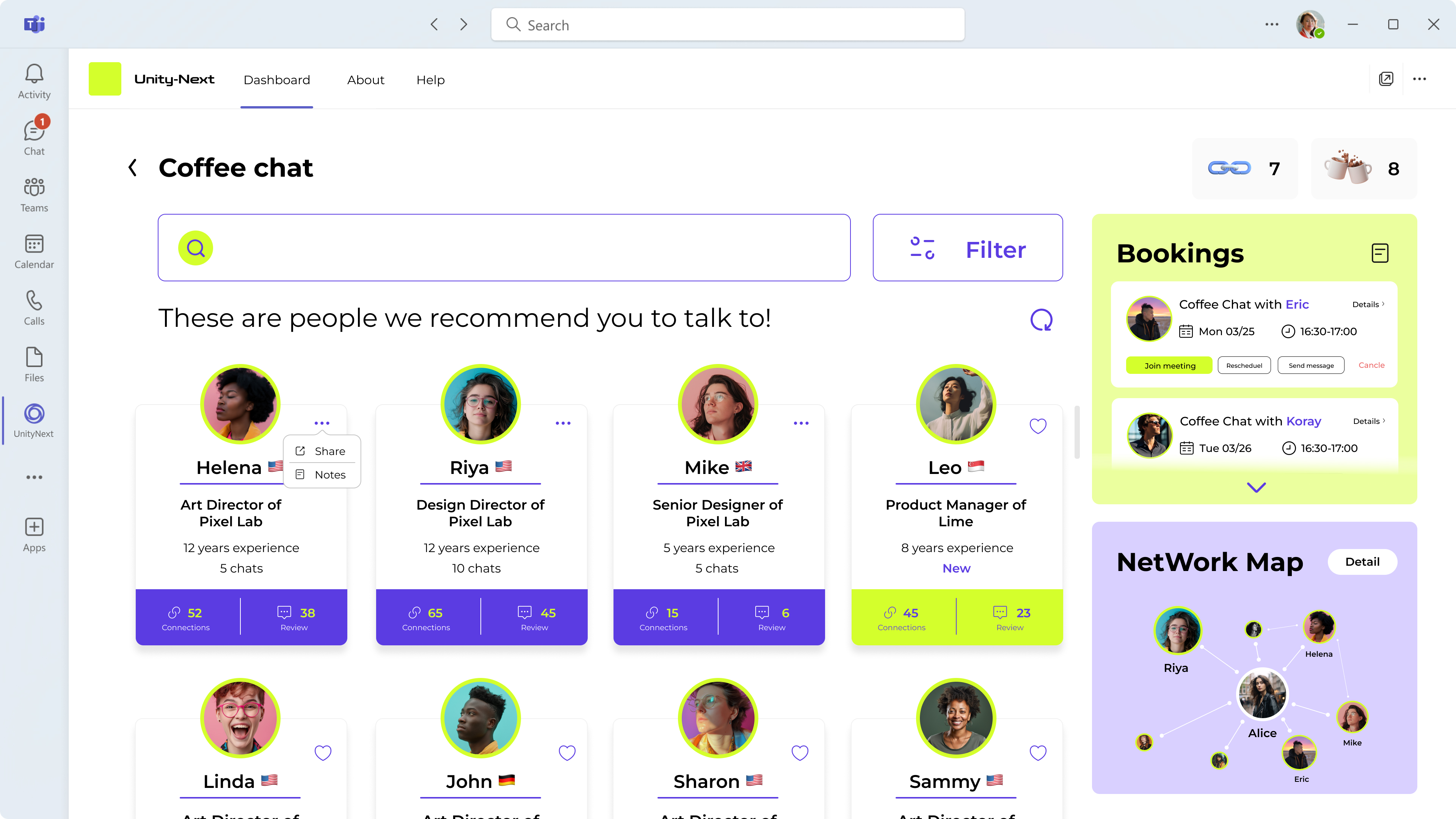
Test the user journey from both the employee side and management side.Identify possible directions to optimize the user experience.
Four.
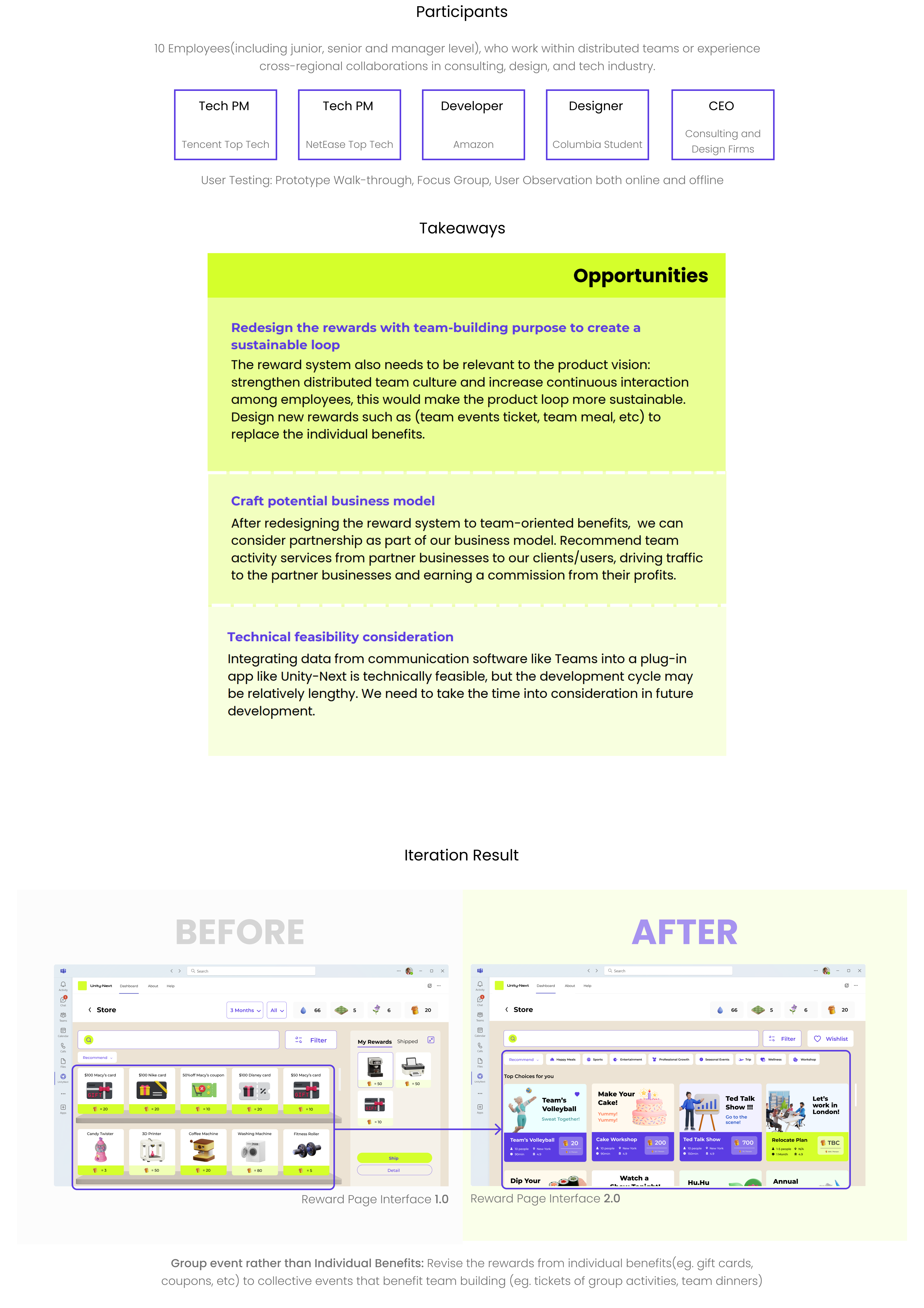
Business Model and Techinical Feasibility
Gather a second round of feedback on the product design and user flow of UnityNext, with a focus on assessing the business model and technical feasibility.
Achievement
We are actively participating in Computer-aided Design and computing conferences—both presenting and publishing our research—to solicit valuable feedback and gather constructive suggestions from the community. Our innovation was accepted by the ACADIA (Association for Computer Aided Design in Architecture) Conference Ideation Lab, with an acceptance rate of less than 30%.
One.
Natural language to spatial relationship Bubble diagrams Generation using LLM
Client’s needs are often descriptive, and it is difficult for them to convert such needs into relevance to the room layout. The basic knowledge of the big prediction model can initially achieve this and convert it into a bubble diagram, which is conducive to the initial consensus between customers and designers.
click to check diagram
Three.
User Profile Settings
Client A thinks he has more specific requirements for the number and details of different rooms. He defines his user profile by setting their key requirements, thus generating bubble diagrams more accurately.
Key Solution.
The NeuralRoom, a 3D web app that Utilizing natural language processing (NLP) to and Graph Neural Network(GNN) to To improve the efficiency of 3D scene design iteration and discussion between designers and non-professional customers by Integration Large Language Model and graph theory